Mimosa EVO - The Evolution of Citrus Genetics with Impressive Potential
Mimosa EVO (translated as "Mimosa Evolution") belongs to a new generation of hybrids that successfully combine an expressive fruit profile, outstanding productivity, and stable plant morphology. It is a predominantly Indica-dominant hybrid with an approximate ratio of 60% Indica and 40% Sativa, created by crossing the legendary Mimosa with Orange Punch. This combination has produced a plant featuring a robust bush structure, rapid floral development, and exceptionally dense buds.
The origins of this cultivar trace back to the elite Mimosa clone from the Emerald Triangle, the historic heart of American cannabis breeding. The original genetics, developed by Symbiotic Genetics, quickly earned cult status among collectors thanks to their vibrant citrus bouquet and uplifting character. The breeding work was later continued by incorporating Orange Punch, a line renowned for passing on massive flowers, heavy resin production, and remarkable genetic stability. This combination resulted in a hybrid that surpasses its parental lines in both yield and cannabinoid production.
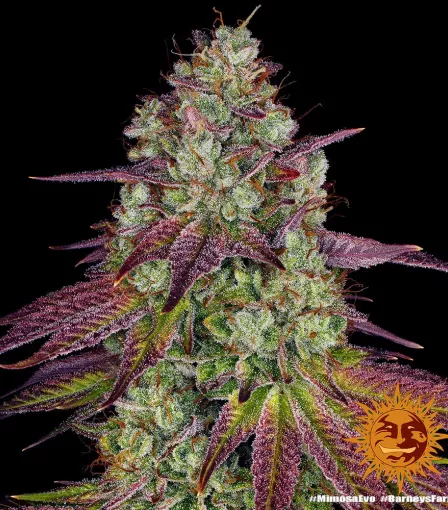
The plant demonstrates vigorous growth from the earliest stages of development. Internodes remain compact, while the lateral branches rapidly catch up with the main cola, giving the plant a symmetrical and well-balanced structure. During flowering, trichome production becomes exceptionally abundant, covering nearly the entire surface of the bracts and surrounding sugar leaves. As maturity approaches, the resin layer becomes so dense that the flowers develop a distinctive silvery frosted appearance.
When cultivated indoors, plants usually remain around one meter tall or slightly exceed that height, making them suitable for most indoor growing systems. Outdoors, under favorable climatic conditions, the plant can develop into a true giant, reaching heights of two meters or more. With an adequately developed root zone, its full genetic potential is expressed through vigorous vegetative growth and numerous secondary flowering sites.
The flowering period lasts approximately 65-70 days. Throughout this time, the buds steadily become denser, the calyxes continue expanding, and resin production intensifies until the final stage of ripening. In regions with long, warm growing seasons, harvest generally takes place during the second half of October.
The genetic potential of this variety allows for truly impressive harvests. Under controlled indoor conditions, yields can reach 700–800 grams per square meter when lighting, nutrition, and environmental parameters are properly optimized. Outdoors, mature plants are capable of producing well over two kilograms under full sunlight and an extended vegetative season.
Its aromatic profile deserves particular attention. By the middle of flowering, the surrounding air becomes saturated with rich notes of ripe orange, sweet mandarin, and tropical fruits. As the flowers fully mature, additional nuances of wild berries, sweet citrus juice, and delicate floral accents emerge. After drying and curing, the bouquet becomes deeper and more refined, developing pronounced fruity sweetness complemented by subtle candy-like undertones.
The flavor closely mirrors the aroma. The inhale opens with a bright blend of lemon and orange zest, gradually revealing notes of mango, mixed berries, and sweet tropical fruit flesh. The exhale leaves a long-lasting fruity aftertaste with delicate spicy nuances lingering on the palate.
Its terpene profile is both rich and remarkably complex. Limonene provides the signature citrus foundation, while myrcene contributes sweet fruity depth and additional body. Caryophyllene introduces gentle peppery accents, whereas linalool softens the overall profile with elegant floral notes. Small amounts of pinene add freshness and make the aroma even more layered.
According to published data, THC content may reach as high as 32% under ideal cultivation conditions, although concentrations between 24% and 26% are considered more typical. Actual cannabinoid levels depend on the phenotype, cultivation techniques, lighting intensity, and harvest timing.
Among experienced cultivators, this hybrid has earned a reputation as a rewarding plant to grow. In my own observations, it responds exceptionally well to training, recovers quickly from moderate stress techniques, and performs excellently with LST, ScrOG, and timely defoliation. Excessive nitrogen during the late flowering stage may slightly delay ripening, so nutrient schedules should be adjusted accordingly.
The plant performs best in warm, sunny climates with long summers. Indoor cultivation benefits from stable air circulation and careful humidity management during late flowering, as the exceptionally dense buds require efficient ventilation. Greenhouse cultivation also produces outstanding results by combining natural sunlight with the ability to maintain an optimal microclimate.
From a breeding perspective, Mimosa EVO represents an excellent example of how thoughtful work with already established genetic lines can produce a next-generation hybrid without sacrificing the signature flavor profile that made its ancestors so highly regarded. The combination of exceptional yields, vibrant citrus aromas, strong plant structure, and a rich terpene profile firmly establishes this cultivar among the most remarkable achievements of modern American cannabis breeding.
Nutritional Value of Hemp Seeds (per 100 g of hulled seeds):
- Calories - 553 kcal
- Protein - 31.6 g
- Fa -t 48.8 g
- Carbohydrates - 8.7 g
- Dietary Fiber - 4.0 g
- Omega-3 - Approximately 8.7 g
- Omega-6 - Approximately 27.5 g
- Vitamin E - 0.8 mg
- Magnesium - 700 mg
- Phosphorus - 1650 mg
- Potassium - 1200 mg
- Iron - 7.9 mg
- Zinc - 9.9 mg
- Manganese - 7.6 mg


 @SexySeedsCom